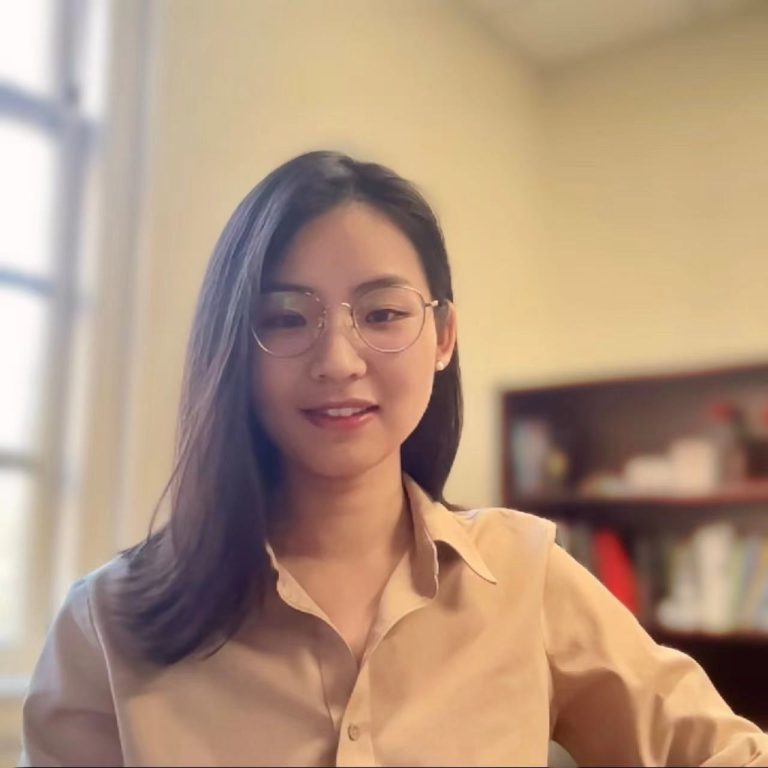
Dr. Minghan Chen is an Associate Professor of Computer Science at Wake Forest University.
Her research focuses on science-guided machine learning and AI for health and biomedical applications.
She welcomes interdisciplinary collaborations and is recruiting motivated students in computational biology and machine learning.
Interested applicants should email a brief background statement, CV, and transcripts.
Research Overview
Our group develops machine learning algorithms for understanding and predicting complex biomedical systems.
Current projects include multimodal data integration, AI surrogates for biological models, disease trajectory forecasting, and Causal AI for Health.
- Deep Learning
- AI Surrogate
- Systems Biology
- Multimodal Learning
- Causal AI
Featured Projects
Multi‑Modal Data Integration
Integrate longitudinal neuroimaging, omics, and clinical data with AI to characterize and predict Alzheimer’s disease progression. Our models learn disease-associated patterns across multiple data modalities to enable personalized prediction of disease trajectories and clinical outcomes.
Open project →
Brain Neural Operator
Design brain neural operators to model tau transport across the brain and forecast tau spatio-temporal
dynamics under different seeding conditions and biophysical parameters,
providing a fast and flexible approach to studying tau propagation.
Explore the Tool →
Biological Dynamics Forecasting
Develop a generative AI framework for cross-system biological trajectory prediction. Given partial time-series observations, RegimeFlow learns underlying dynamical patterns and forecasts future trajectories, enabling accurate long-term prediction across diverse systems biology models.
Try RegimeFlow→
MAMBA Brain Fingerprinting
Investigate MAMBAxBrain framework to integrate Mamba with functional connectivity analysis for multi-task fMRI modeling, including brain fingerprinting, cognitive decoding, reaction-time prediction, and schizophrenia diagnosis.
AI Surrogate for Systems Biology
We Build AI-based surrogate models to accelerate complex systems biology simulations. These surrogates reduce computational cost while maintaining predictive accuracy for pathway and regulatory network analysis.
Teaching
-
CSC 111 Introduction to Computer Science (Click to View Undergraduate Course Projects)
Explore interactive games developed by undergraduate student
- CSC 201 Data Structure and Algorithms
- CSC 387/687 Computational Systems Biology
- CSC 790 Advanced Topics: AI for Health
- CSC 790 Advanced Topics: Science-Guided Machine Learning
Selected Publications
-
Rao, H., Zhang, J.Z., Gu, Y., Liu, Z., Yu, G., Su, J., Cao, Y., Fan, Y, Chen, M. (2026).
A Regime-Aware Trajectory Prediction Framework for 1000+ Systems Biology Models.
International Conference of Machine Learning (ICML) .
-
Jiang, Y., Ma, J., Wen, G., Han, X., He, H., Su, J., Yang F., Chen, M. (2026).
AlzheimerODE: A Knowledge-Guided Generative Model for Alzheimer’s Disease Progression em>
32nd ACM SIGKDD Conference on Knowledge Discovery and Data Mining (KDD) .
-
Rahman, M., Wang, G., Zhou, K., Chen, M., Fan, Y. (2025).
Catastrophic Forgetting in KANs.
Proceedings of AAAI Conference on Artificial Intelligence.
-
Chen, C., Xu, E., Yang, D., Yan, C., Wei, T., Chen, H., Wei, Y., & Chen, M. (2025).
Chemical environment adaptive learning for optical band gap prediction of doped graphitic carbon nitride nanosheets.
Neural Computing and Applications.
-
Xu, C., Xu, E., Xiao, Y., Yang, D., Wu, G., & Chen, M. (2025).
A multiscale model to explain the spatiotemporal progression of amyloid beta and tau pathology in Alzheimer's disease.
International Journal of Biological Macromolecules.
-
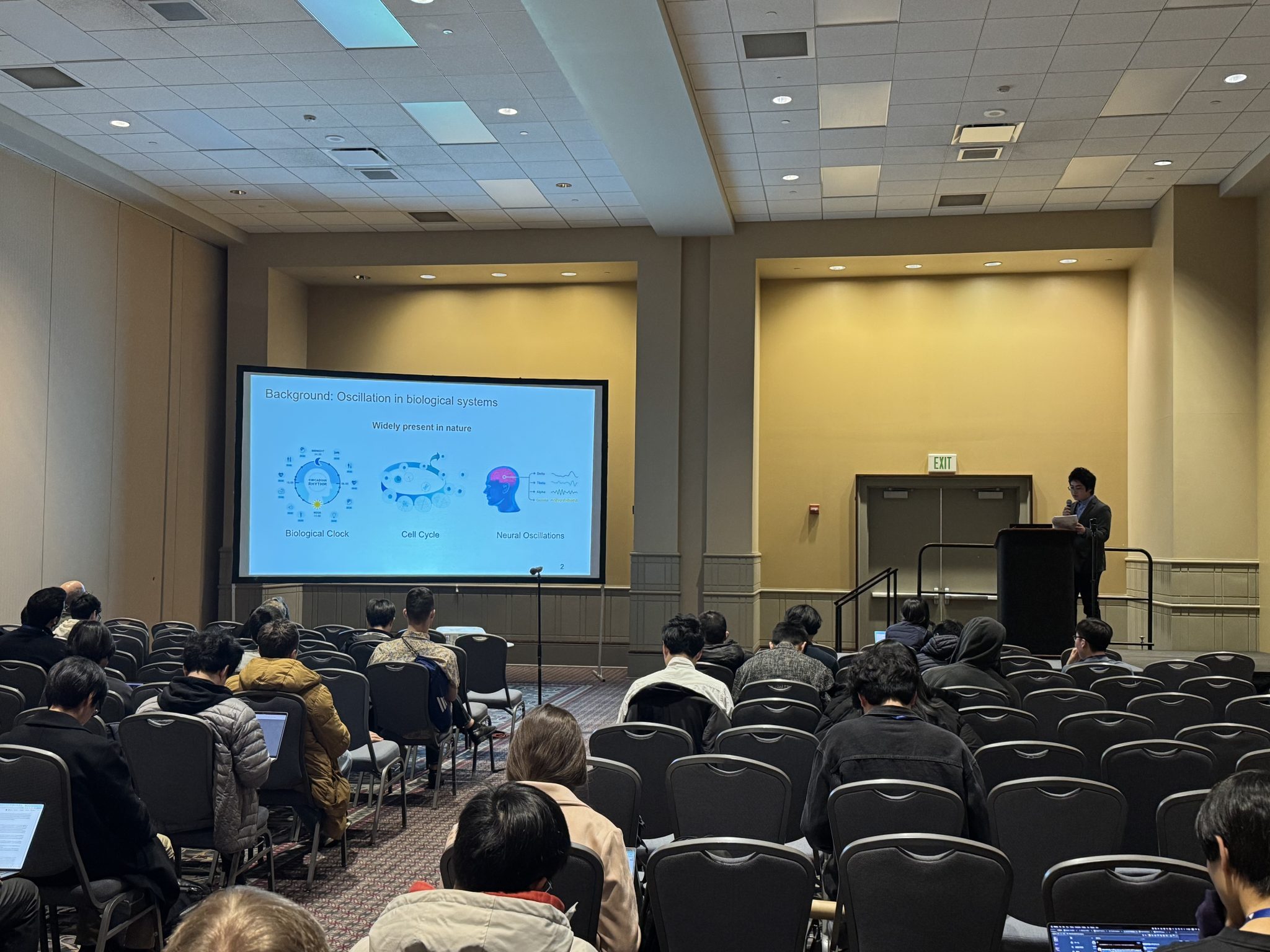
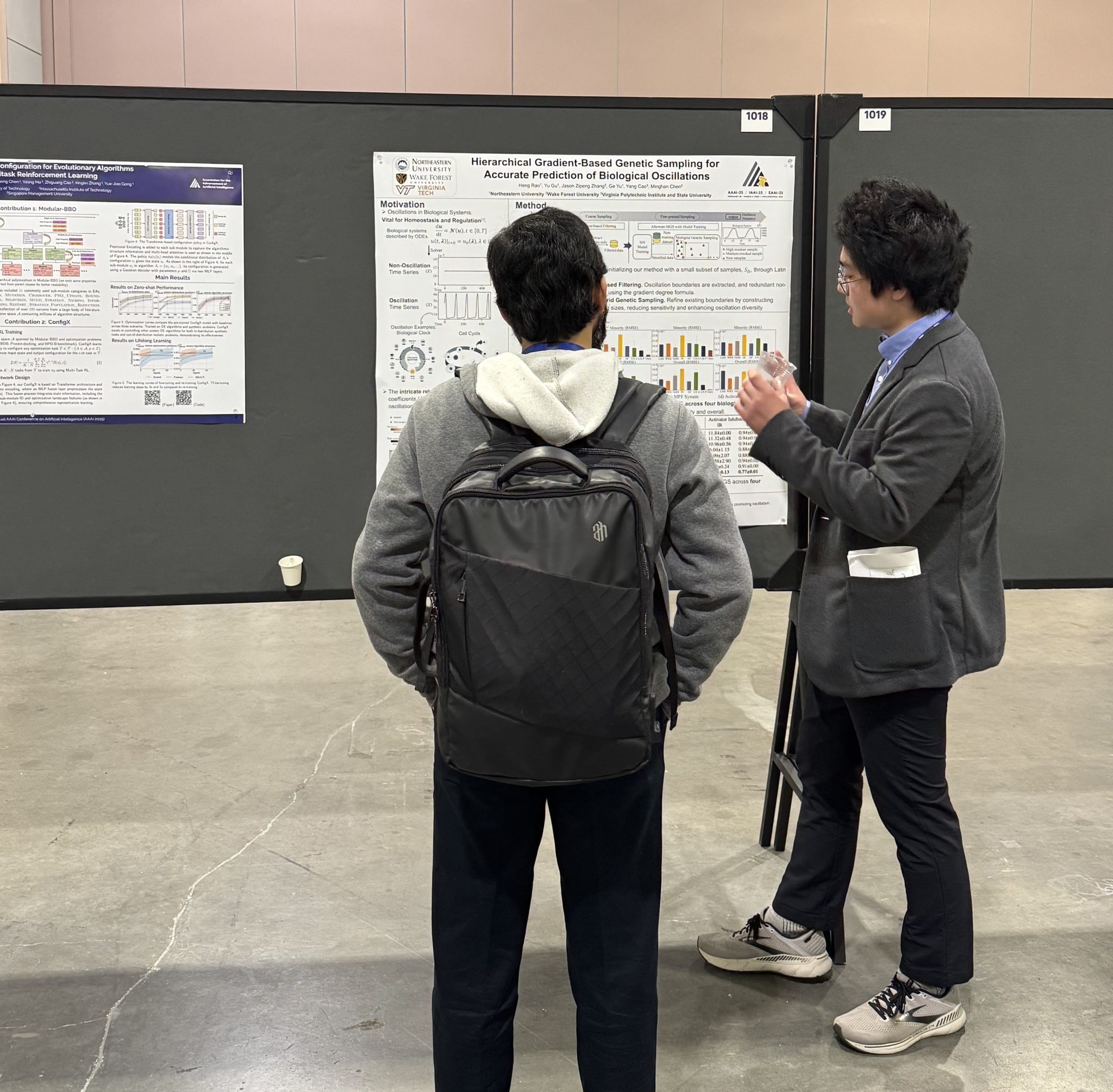
Rao, H., Gu, Y., Zhang, J.Z., Yu, G., Cao, Y., & Chen, M. (2025).
Hierarchical Gradient-Based Genetic Sampling for Accurate Prediction of Biological Oscillations.
Proceedings of AAAI Conference on Artificial Intelligence.
-
Liu, S., Chen, M., Cao, X., Sheng, Z., Sun, J., Zhan, J., Wang, S., Wu, G., & Yang, D. (2025).
A Joint Multi-Graph Learning Framework for Dynamic Functional Connectivity Network Estimation Across Multiple Time Scales.
IEEE ISBI 2025.
-
Yang, D., Shen, H., Chen, M., Wang, S., Chen, J., Cai, H., Chen, X., Wu, G., & Zhu, W. (2024).
A novel spatio-temporal hub identification in brain networks by learning dynamic graph embedding on Grassmannian manifolds.
IEEE Transactions on Medical Imaging.
-
Zhu, W., Du, Z., Xu, Z., Yang, D., Chen, M., & Song, Q. (2024).
SCRN: Single-cell Gene Regulatory Network Identification in Alzheimer’s Disease.
IEEE/ACM Transactions on Computational Biology and Bioinformatics.
-
Yang, D., Shen, H., Chen, M., Xue, Y., Wang, S., Wu, G., & Zhu, W. (2023).
Spatiotemporal Hub Identification in Brain Network by Learning Dynamic Graph Embedding on Grassmannian Manifold.
MICCAI (Medical Image Computing and Computer-Assisted Intervention).
-
Chen, M., Xu, C., Xu, Z., He, W., Zhang, H., Su, J., & Song, Q. (2022).
Uncovering the dynamic effects of DEX treatment on lung cancer by integrating bioinformatic inference and multiscale modeling of scRNA-seq and proteomics data.
Computers in Biology and Medicine.
-
Xu, C., Hollis, H., Dai, M., Yao, X., Watson, L.T., Cao, Y., & Chen, M. (2022).
Modeling the temporal dynamics of master regulators and CtrA proteolysis in Caulobacter crescentus cell cycle.
PLoS Computational Biology.
-
Chen, M., Ahmadian, M., Watson, L.T., & Cao, Y. (2020).
Finding acceptable parameter regions of stochastic Hill functions for multisite phosphorylation mechanism.
Journal of Chemical Physics.
Team
Current Group Members
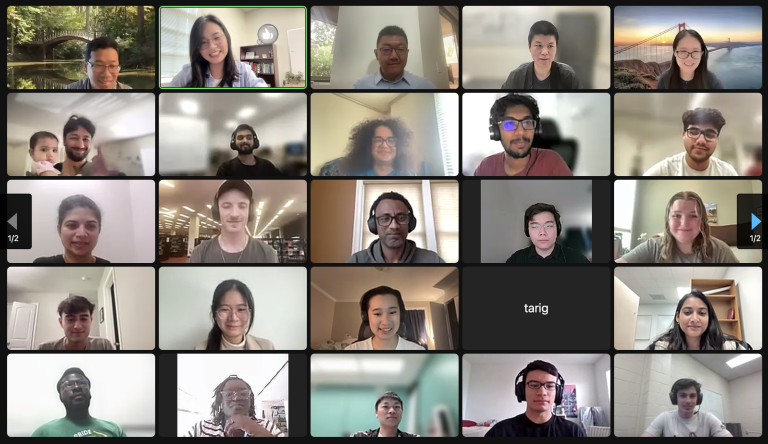
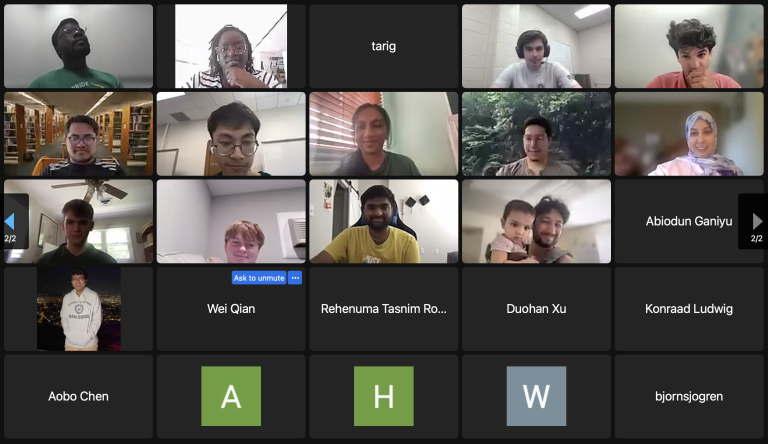
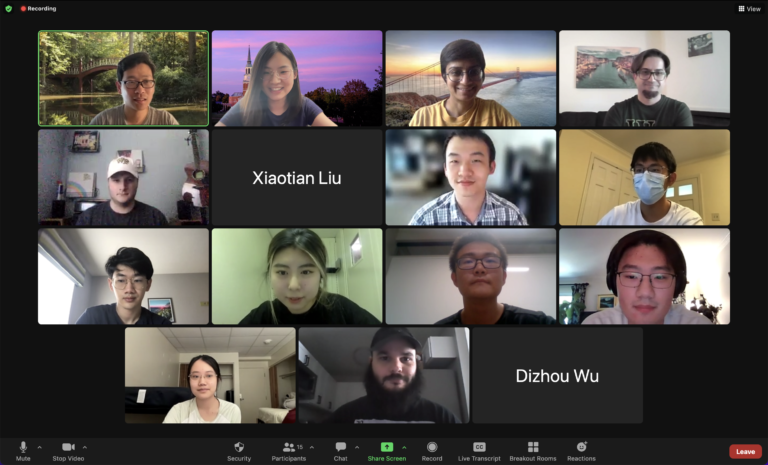
Dan Gao
Urmi Saha
Ben Hoffman
Fiona Zhang
Former Students
Jason Zhang, 2026 (John W. Sawyer Prize of 2026! Harvard Medical School)
Grayson Gooden, 2026 (Carnegie Mellon University)
Yang Xiao, 2025 (Computer Science, University of Pennsylvania)
Johnson Wang, 2024 (Computational Biology, Harvard University)
Ruiwen Yang, 2024 (Data Science, University of Pennsylvania)
Selina Zhang, 2023 (Computer Science, Harvard University)
Ziang Xu, 2023 (Computer Science, Columbia University)
Zhanyang Sun, 2023 (Data Science, University of Southern California)
Enze Xu, 2023 (Computer Science, William & Mary College)
Michelle Dai, 2022 (Computational Biology, Harvard University)
Patrick Fan, 2022 (Computational Finance, Carnegie Mellon University)
Laurent Zhang, 2022 (Data Science, New York University)
Bess Morrell, 2022 (Independent Study)
Hao Lin, 2022 (Summer research, Duke University)
David Ding, 2022 (Computer Science, Rice University)
Henry Hollis, 2021 (Biomedical Engineering, Drexel University)
Alex Wei, 2020 (Computational Biology, Harvard University)